Monday, March 17, 2014

Our first 2014 night - 2/24/14

This first French night of the year was dedicated to sons, sons and their relationships with their fathers or their mothers.
It was an evening of depth and wit, the reading resonated in every one's mind as we all are sons or daughters and some of us know now the parental side of (the wild side?)  having sons or daughters.


As usual the evening began by chatting and drinking a glass or two of wine.

Happy new people and happy faithful friends


3

Then Emmanuelle Ertel launched the readings by presenting the first excerpt,  a short story, Tout pour lui plaire/Everything To Please Him, written by Carole Fives and translated by Brett Ray. It is part of a bigger collection named When Happiness Finds Us, published in France in 2013.


The son in this short story ceaselessly tried to get his father's approval, by becoming a painter, then a writer, then a comedian making fun of his own father. He finally understands that there is no way to please him, no way to make his father satisfied. It's hopeless.


Emmenuelle read the short story in French and Brett Ray read his own translation, alternating the language as the son changed his professions.


Everyone is focused,  silently listening to the echoes this story sounded in everyone's mind !


Then Isabelle Milkoff took over and presented the next excerpt from Veronique Olmi's latest novel - La nuit en verité/The Truth About The Night.

The three first chapters were read : in French by Isabelle and in English by John Galbraith Simmons.

The young Enzo lives with his mother Lioubia in a big apartment in the center of Paris, a neighborhood in the middle of the city that is popular with the tourists. He goes to school while Lioubia cleans the apartment and has tea with her friends. But Enzo is a fat boy, clumsy and frequently bullied by his class mates and even once by the gym teacher when he forced him to try to climb at the top of a rope, even though it was impossible for him. On that same Friday evening he came back home in the rain and as he got into the house, he heard Lioubia and her friends. He knew immediately he would not be able to get to the Nutella and have the snack he so desperately wanted.


Now it's time for the last excerpts.
The last but not the least.
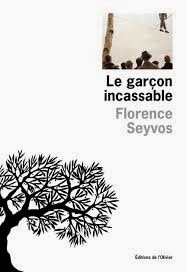
They were taken from The Unbreakable Boy/Le Garçon incassable by Florence Seyvos.
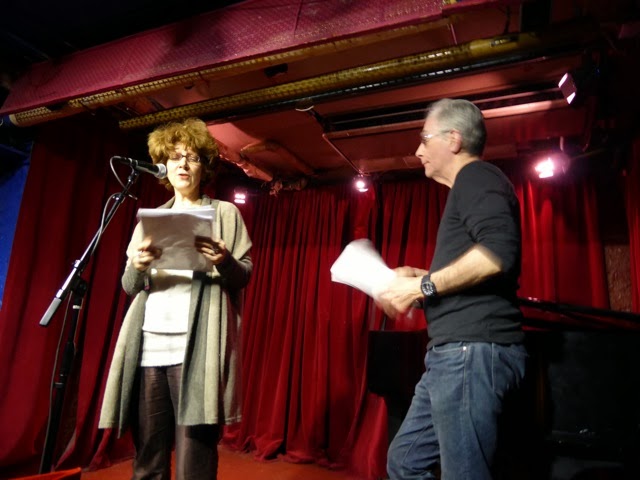
Philippe Aufort read the French part of the chapters we chose, Tom Radigan read the English that he had helped to translate. The first draft of the translation by Isabelle Milkoff and Catherine Dop-Miller found the English voice to this French story.


The book tells two stories of about a son and his father - 
Buster Keaton's story as well as the story of Henri, the narrator's step-brother. Henri is handicapped since birth but his father pushed him to stand, walk and live like any other kid.
But Henri was not like any other kid.


"Henri’s father says : «Children, you have to break them. He truly thinks that you cannot raise children without breaking their spirit, that there is no other way.  Not just make them bend, but break them." 

"His father forced him to kneel outside on the cement, telling him he would stay there until he decided to greet Yacouba politely. Henri stayed there an hour, yelling, crying with rage and still refusing to yield. "


"F...... Henri, a little reed that bends but doesn’t break."

Again, everyone is listening and feeling the tension created by the words. 


Some follow along by reading the texts. 

That's all, folks
We wished you were here to share these very deep and breathtaking moments.
See you next time
It will be in April, the 14th,
when spring is back
At last !
We will be glad to see you all again
Have a nice end of winter 
and save our next French night date !

Sunday, January 26, 2014

Sons at the Cornelia on 2/24/14


We hope that 2014 has started well and we welcome you to our next French Literature night at the Cornelia Street Cafe, on February 24th from 6 pm till 7.30 pm

The evening will be dedicated to "sons".


The three excerpts we chose to read are linked by the specific theme about the relationship between parents and their sons.


First, the character in Carole Fives' short story - Anything to please him - tells how his efforts to please his father were in vain  as he changed professions, first becoming an artist, then a writer, and finally a comedian. He could never get the slightest acknowledgement from his beloved father even though everyone else congratulated him about his accomplishments. This short story is part of bigger collection called - When Happiness Finds Us - that was released in 2010 by Le Passage-Paris/New York éditions


Veronique Olmi's main character  in The truth about the night is a young fat boy, alienated at school, who can't help but disappoint his mother, especially when she gathers with her friends in the kitchen where he would like to get into the jar of Nutella. The novel was published in 2013 by Albin Michel.


In The Unbreakable boy, Florence Seyvos tells the story of Buster Keaton and his father. This leads her to reflect upon her own childhood when she witnessed the strong and difficult relationship of her step-father with his handicaped son, Henri. The father appears to be tough, demanding and without pity, but this is clearly for his son's sake.  This novel was published by Editions de l'Olivier in 2013


Carole Fives
Veronique Olmi

Florence Seyvos


Please come and join us to share those strong and intense moments of French literature.
2/24/14
6pm
at Cornelia Street Cafe
Cornelia Street 28
NYC, 10021

Wednesday, October 30, 2013

Chevillard's night

We had another wonderful  French night, two weeks ago, 
welcoming Eric Chevillard's novels.

Eric Chevillard has been publishing since 1987.
He is published by the very famous and very demanding French publisher Editions de Minuit and his novels place him in the tradition of humoristic novelists such as Laurence Sterne. The stories he tells have a touch of nonsense and his characters are misfits who could figure in a Beckett or a Kafka novel. He has the style of a literary master : his sentences expand through absurd details and considerations about the character's story.


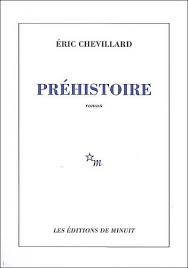
As for example, in the begining of Prehistoric times the narrator gives precise details about the uniform he has to wear : the uniform doesn't suit him because it belonged to Boborikine, the man he replaced. Boborikine didn't quite fit in the uniform either because it belonged before him to Crescenzo who was smaller and thiner. Both men were physically different but had to wear the same uniform and respect to the job it represents : 
"a uniform needs nobody except to make it stand".


Isabelle Milkoff and Margaret George reading the first chapters of Prehistoric Times


In "Lecture with Slides", a chapter taken from The posthumous works of Thomas Pilaster, the lecturer is warning his audience about a very strong ecological issue : "the desert is advancing". The precise description of this sandy invasion is mixed with foolish considerations about the causes and dangers it represents. The irony in Eric Chveillard's novel is met with crualty. 


Philippe Aufort and Tom Radigan reading "Lecture with Slides"


with a strong conviction !

It was a convincing and scary reading, indeed
because, Ladies and gentlemen, be aware :

"The desert is advancing"


In The Rabbit,  the bunny shape of a head-rest cover in a car is very quietly and precisely described. It is the perfect illustration of our age that insists to "surround ourselves with children's toys".  It takes a while before we understand that this head-rest cover designed as a bunny is what is left of a wrecked car.

Emmanuelle Ertel launched the reading of the short story 
which was translated by her students of the Master of Literary Translation in NYU.


Bonnie Zaleski, Victoria Sheehan and Brett Ray 
are here on the starting blocks to begin their reading 


Everyone is carefuly listening

and our faithful young audience is having fun.

After the reading some time for a chat


and for pictures !


It is so nice to make people happy !


The translations of the three Chevillard's excerpts were done by
Alison Waters for Prehistoric times
Christopher Clarke for The posthumous works of thomas Pilaster
and by students in the Master of LiteraryTranslation program at NYU for The Rabbit


If you missed Chevillard, go visit his daily blog : http://l-autofictif.over-blog.com/


See you soon, folks !
We'll let you know as soon as possible when our next French Night is happening.

Sunday, September 15, 2013

Eric Chevillard for our 11th French night on 10/17

We are back !

The summer was great and we are thrilled to come back for a new French night, on October the 17th.

We will be hosting Eric Chevillard's novels. Eric Chevillard  is published by Editions de Minuit and belongs to the kind of writers this publishing house most likes : his style is extremely precise and rich.  He tells stories with a distant irony that encompasses not only the content but also the genre. He is one of the most prolific novelists of his generation, publishing almost a book every year since 1987.
He also has a blog since 2007 where he writes three sentences every day. http://l-autofictif.over-blog.com/


We will read excerpts of three of his books.

Our first reading is taken from Prehistoric times, written in 1994 and translated by Alison Waters.  She won the French-American Foundation Transaltion Price in 2013.


After Boborikine's death, the narrator of this novel takes over Boborikine's job as a guide in the prehistoric cave of Pales. He also has to put on Boborikine's uniform. But something goes wrong...


We will also read from The posthumous works of Thomas Pilaster, written in 1999 and translated by Chris Clarke for his Masters thesis in 2012


 The poet Marc-Antoine Marson celebrates the works of his friend, Thomas Pilaster, by publishing and commenting on them. His highly admirative comments at the beginning of the book become more and more critical...


Finally we will read the short story "Bunny" in the collection published under the title Scalps by Fata Morgana in 2004. This short story is translated by Emmanuelle Ertel's students in the Masters of Literary Translation program at New York University.


Commenting on our taste for tacky car accessories, the narrator introduces a car where a seat cover of a bunny decorates the diver's seat....


Funny and cruel at the same time, the narrator is both efficient and distant.  Eric Chevillard is one of the most exciting and challenging French writers of our time.


Join us for an outstanding new French night
at the Cornelia Street Cafe
Cornelia Street 29, NY
W 4 on the E, A, C